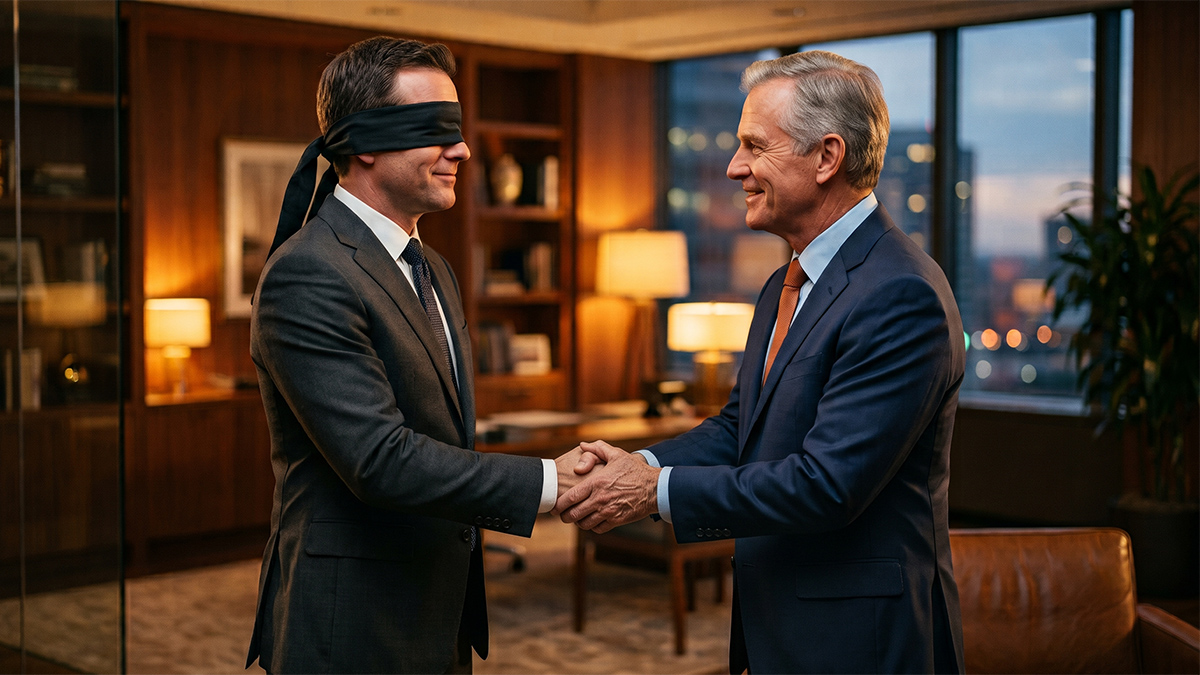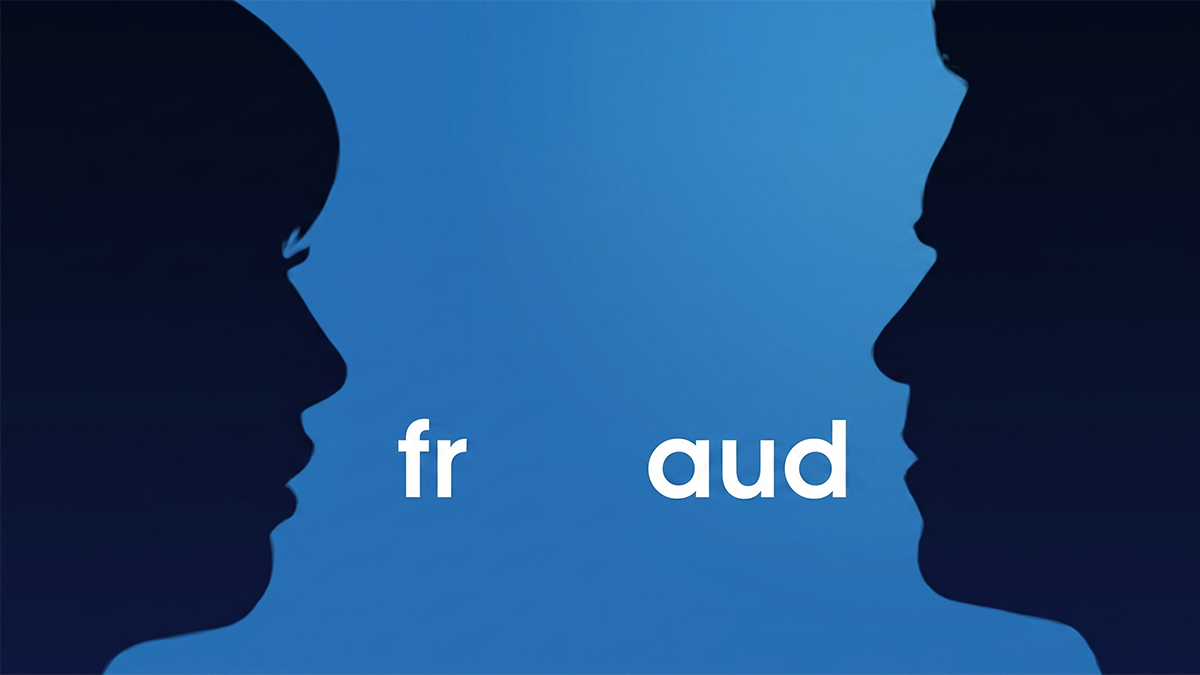
A three second clip pulled from a podcast, webinar, or voicemail greeting is now enough to clone a voice convincingly. Advisory firms are learning that a familiar voice on the phone is no longer proof of anything.
Every recorded webinar, every conference keynote, every voicemail greeting an advisor has ever left is now potential training data for someone who wants to sound exactly like them. Voice cloning technology has crossed a threshold security researchers call the indistinguishable line, meaning a listener can no longer reliably tell a real voice from a synthetic one, and the amount of source audio required to get there has collapsed to almost nothing.
According to research from McAfee, as little as three seconds of clear audio is enough to produce a voice clone with roughly 85 percent accuracy. A few additional samples push that closer to 95 percent. For advisory firms, whose principals speak publicly at conferences, appear on podcasts, and leave voicemail greetings by design, the raw material for an attack is already sitting in public view.
The trust channel fraud actually targets
Advisors have spent years training clients to expect a phone call before a large transfer or an account change. That habit, built for their protection, is exactly what current attacks exploit. Fraudsters clone a client’s voice, or an advisor’s, and use it to authorize a wire transfer, request a password reset, or walk a service team through a change that would normally trigger suspicion.
He used to think of it as an IT problem. He now thinks of it as a client trust problem, and the distinction changes where he invests his attention.
— Describing a Sovereign Financial Group principal’s shift in thinking, InvestmentNews, 2026
It has already cost real money
The clearest evidence that this threat is not theoretical came out of Hong Kong in early 2024. A finance employee at the engineering firm Arup joined what looked like an ordinary video call with the company’s chief financial officer and several colleagues. Every person on that call was synthetic. Over the course of the meeting, the employee authorized fifteen separate transfers totaling 25.6 million dollars before anyone realized what had happened. Arup confirmed the incident publicly in May 2024, and the funds were never recovered.
The pattern is not new, only faster and more convincing than it used to be. A UK based energy firm lost 220,000 euros back in 2019 after an employee received a phone call from what sounded exactly like the company’s chief executive, directing an urgent wire to a supplier. As recently as January 2026, a businessman in the Swiss canton of Schwyz was defrauded of millions of dollars after a series of phone calls over two weeks convinced him he was speaking with someone he trusted. The case remains under investigation.
None of these cases targeted a wealth management firm directly, but the mechanics transfer over without modification. A familiar voice, an urgent request, and a channel the recipient has no built in reason to distrust. Advisory firms move client money on the same kind of verbal authorization these attacks are purpose built to exploit, which is exactly why the protocol matters more than the technology.
Regulators are no longer treating this as a distant risk either. FINRA’s 2026 Annual Regulatory Oversight Report, released in December 2025, is remarkably specific about how this plays out inside a brokerage relationship. It describes fraudsters using generative AI to build a credible voice clone of an investor, then using that cloned voice to persuade a member firm to grant or change access to the investor’s accounts. FINRA names this directly as a threat to brokerage accounts, not a hypothetical extension of corporate fraud into a new industry.
The industry already has a documented near miss that shows exactly what FINRA is describing. In the spring of 2023, Florida investor Clive Kabatznik called his Bank of America representative to discuss a large transfer he was planning. Shortly after, she received a second call. It sounded like Kabatznik, but it was not. A fraudster using AI generated speech was attempting to redirect the transfer to a different account. The banker noticed the voice repeating itself and interrupting oddly, grew suspicious, and ended the call without moving any money. The bank cut off contact with Kabatznik entirely, real calls and emails included, for roughly ten days until they could reestablish his identity in person. Nothing was lost, but only because one banker’s instinct caught what the verification process itself did not.
The Kabatznik case is worth sitting with longer than the others, because it is the one that most resembles an actual advisor client relationship, and because it worked out only through luck and one employee’s instinct rather than a designed control. That is not a standard worth relying on at scale.
Why voice is no longer sufficient verification
The gap between how confident firms feel and how exposed they actually are is the real story here. Most advisors still treat a recognized voice, or a familiar caller ID, as a legitimate form of verification. The data suggests that confidence is badly misplaced.
Eight in ten firms across industries have no formal deepfake response plan at all. For a wealth management firm, where a single successful impersonation can mean an unauthorized wire transfer, reputational damage, and a very uncomfortable client conversation, that gap is not one to leave unaddressed.
A verification protocol that doesn’t rely on trust
The fix is not more suspicion toward every client call. It is a small number of procedural changes that remove voice as the sole point of failure.
None of these controls require exotic technology. They require a written protocol, a team trained to follow it consistently, and leadership willing to treat a thirty second delay as an acceptable cost of doing business safely. Firms that already run tabletop exercises for cybersecurity incidents can extend the same discipline to voice based fraud without building a program from scratch.